Ergonomics
Musculoskeletal injuries (MSIs) are the most common type of work-related injury in British Columbia. Exposure to workplace factors such as the use of force, repetitive movements, and poor posture can lead to MSIs, including sprains, strains, inflammation, and conditions like tendonitis, bursitis, and carpal tunnel syndrome.
MSI risks can be present in any workplace, and employers are required to assess, eliminate, or minimize risks while providing workers with education and training. Ergonomics helps reduce MSI risk by improving the interaction between people and their physical environment.
What is Ergonomics?
-
Definition
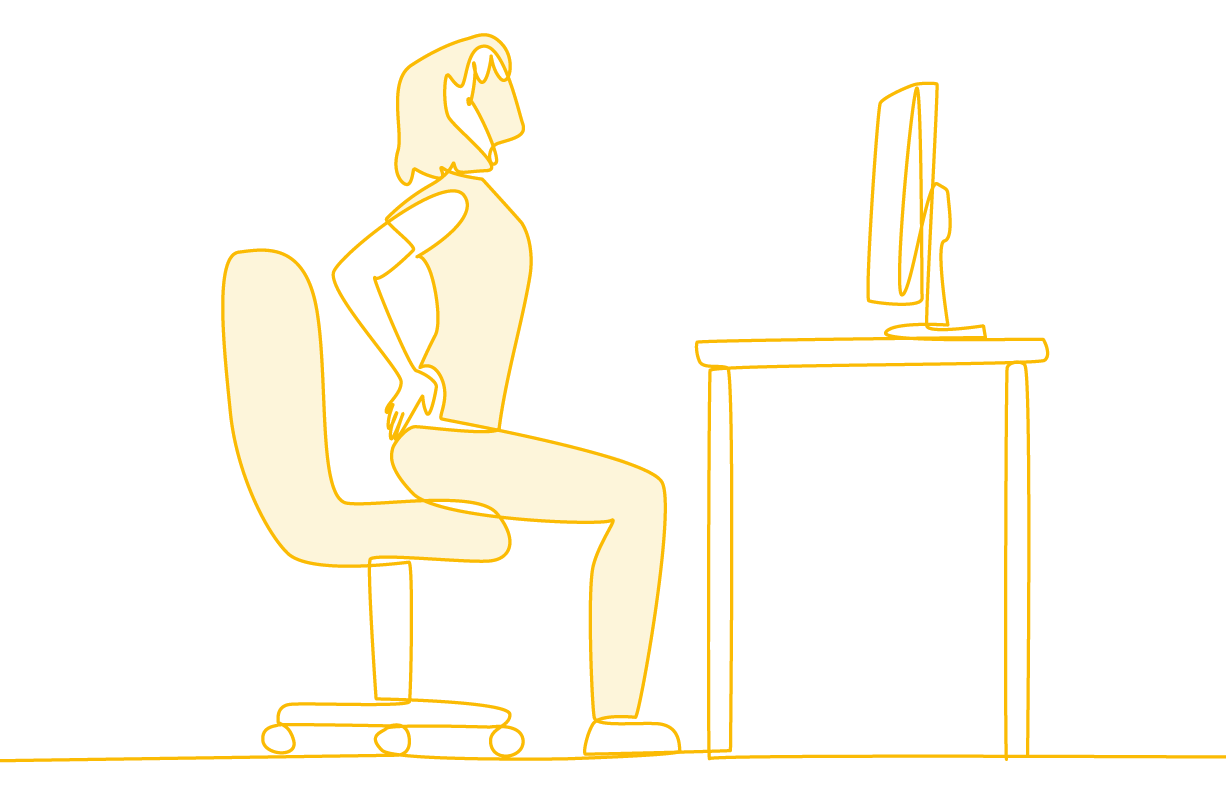
Ergonomics is the process of designing the job to fit the worker, which reduces the likelihood and severity of repetitive strain injuries and musculoskeletal disorders.
Ergonomics includes:
- Job design (e.g., workflow, order of tasks, staff scheduling).
- Tool and equipment selection.
- Proper lighting to reduce eye and neck strain.
- Workspace organization (e.g., removing clutter, promptly cleaning up spills) to reduce the risk of slips, trips, and falls.
Did you know?
-
Fact #1
Musculoskeletal injuries (MSI) make up about 30% of all workplace injury claims.
About 6000 claims for MSI (over-exertion and body motion) were processed in 2023 for the health care and social service sector – which is more than any other sector.
Over 10,000 claims for back strains were processed in 2023 (across all sectors). These claims account for almost 600,000 lost days of work due to back injuries alone.
-
Fact #2
Many musculoskeletal injuries are reversible, if treated early enough. If left untreated, however, they can lead to life-long issues.
Ergonomic Risk Assessment
-
Complete Risk Assessment
The employer must conduct an ergonomic risk assessment if ergonomic risk factors for musculoskeletal injury (MSI) are present. This assessment identifies the level of risk associated with physical demands that could lead to MSIs in the workplace. In a medical clinic, the main areas of concern are patient handling and computer workstation ergonomics.
Musculoskeletal Injury (MSI) Prevention
-
Review Workstation Arrangement
A workstation should be arranged so that:
- The employee does not have to bend their neck into an awkward posture while performing the task.
- Consider using a headset to help prevent awkward neck postures.
- There is sufficient light that an employee can see without squinting.
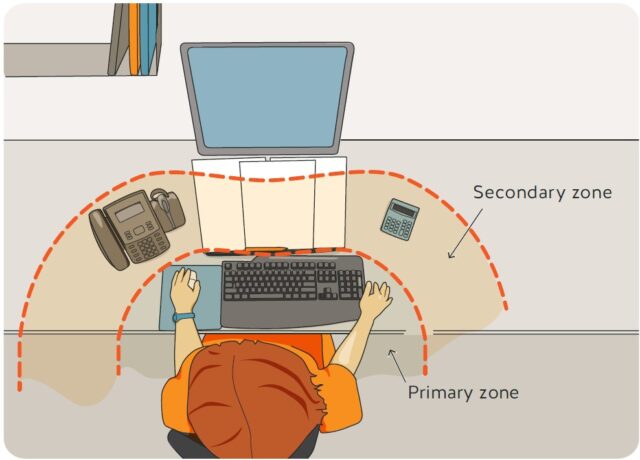
- Objects are placed into three zones, based on their frequency of use. Frequently used objects (e.g., keyboard, pen) should be within the Primary zone, which is the area reachable by the employee with their arm relaxed. The Secondary zone, which is the area reachable by the employee when they extend their arm, should contain less frequently used items (e.g., reference materials, telephone). Uncommonly used objects (e.g., task lights) are placed in the zone beyond Primary and Secondary.
-
Review Computer Arrangement
Specifically for computer workstations:
- The computer screen should be positioned directly in front of the user.
- If several screens are present, they should be arranged so that the middle of the two screens is in front of the user.
- The computer screen should be positioned perpendicular to sources of light, to reduce glare.
- An external keyboard and mouse should be present when using a laptop.
- Documents being transcribed onto the computer should be placed close to or at the same viewing distance as the monitor.
- The brightness and contrast of the screen should be adjusted to provide a comfortable viewing experience for the user.
This rack card is designed to help prevent MSI among staff who work at computer workstations. We recommend printing and displaying it in a staff area of the clinic for easy reference.
Refer to pages 27-29 of the ‘WorkSafeBC – How to Make Your Workstation Fit You’ document for a comprehensive computer workstation ergonomics checklist.
-
Review Worker Education and Training
Employers must ensure workers are educated to identify MSI risks, recognize symptoms, understand potential health effects, and know how to prevent them. They must also ensure that workers at risk are trained in safe work procedures and the proper use of control measures.
This poster is designed to support clinic staff education and training on preventing MSI. We recommend printing and displaying it in a staff area of your clinic for easy reference.
Additional Tips to Reduce the Risk of MSI
-
Lifting and Handling
- If possible, use carts to move heavy objects around the clinic instead of lifting or carrying them.
- When lifting heavy objects, hold the object as close to your body as possible.
- Avoid twisting your back while lifting.
- Ask for help.
- Make sure you can see where you are going, and the path is clear.
- Take breaks, especially after long periods of repetitive movements.
Additional Resources
Legal Requirements
Web Resource
WorkSafeBC – MSI Risk Assessment worksheet
Web Resource
WorkSafeBC How to make your workstation fit you
Web Resource
WorkSafeBC Preventing Musculoskeletal Injury
Web Resource
WorkSafeBC – Understanding the Risks of MSI